

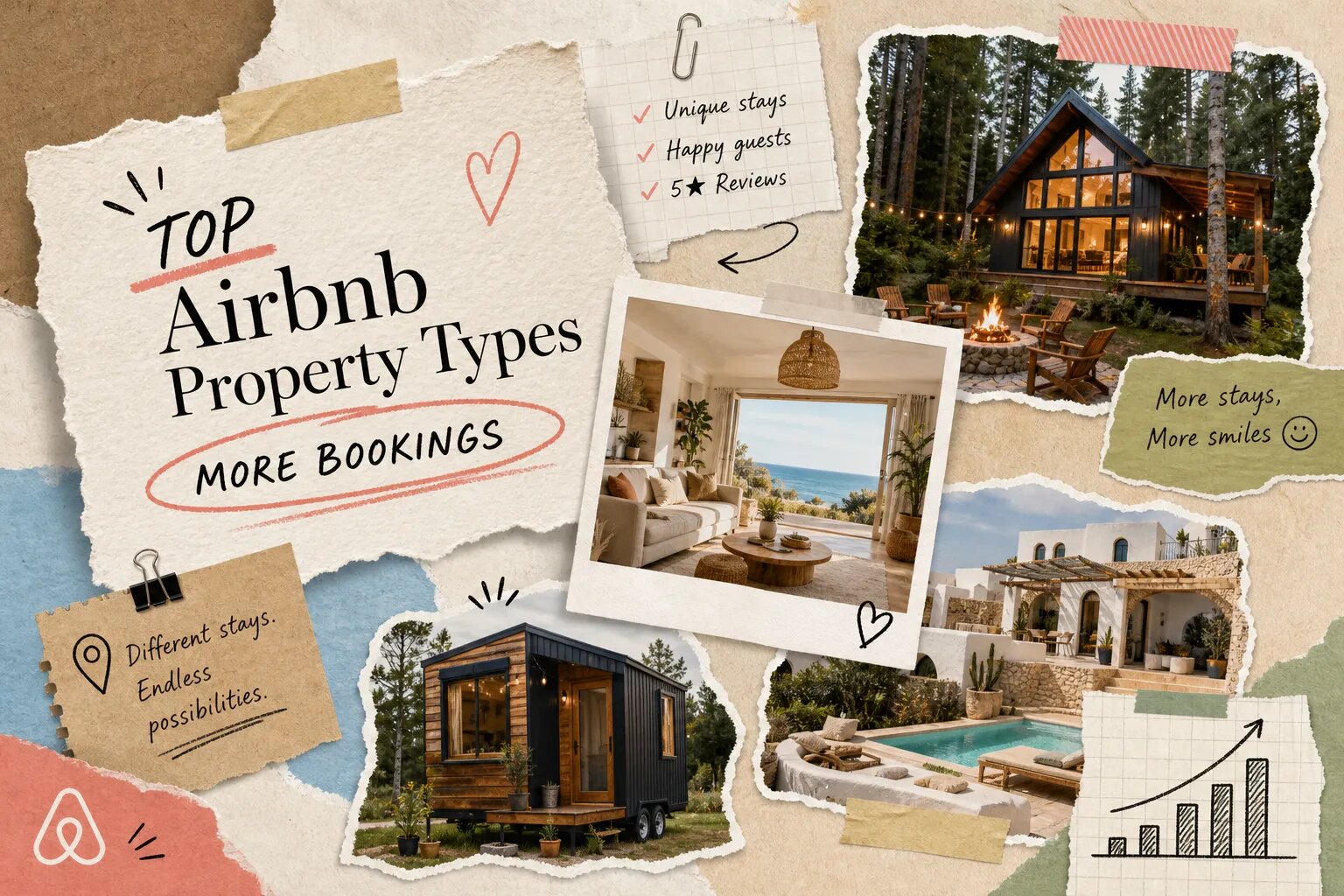
Property type decides who finds your listing before a guest reads a word. A city studio attracts a different crowd than a countryside cottage, and the design that works in one often falls flat in the other.
This guide compares four property types and the design approach that suits each one.
How each property type performs
Apartments are the most common type of Airbnb supply. They are easy to furnish and usually well located, but competition is heavy, so the listing has to stand out on photos and price. Guests book them for city breaks, business trips and short stays.
Villas attract families, groups and celebrations. They command higher nightly rates and longer stays, but they carry higher running costs and more guest expectations.
Cottages draw couples, small families and guests looking to escape the city. They book best on weekends and holidays, and character features help them stand out.
Serviced units sit between a hotel and a private rental. Guests expect hotel-level consistency, and business travellers make up much of the demand.
Host discussions on r/airbnb_hosts, including a thread on buying a first Airbnb property, repeat the same warnings: costs run higher than expected, furnishing a multi-bedroom unit can cost tens of thousands, and an unsaturated market matters more than the property itself. Several hosts recommended checking whether the property still works as a long-term rental if short-term bookings slow.
Source: Reddit, r/airbnb_hosts, discussion on buying a first Airbnb property.
Property type comparison
| Property type | Typical guests | Booking pattern | Main design priority | Common risk |
|---|---|---|---|---|
| Apartment | Solo travellers, couples, business guests | Short notice, city breaks | Bright layout, workspace, strong photos | Feels small or generic |
| Villa | Families, groups, celebrations | Advance booking, longer stays | Dining, outdoor living, durable surfaces | High upkeep costs |
| Cottage | Couples, small families, retreat seekers | Weekends and holidays | Character, warmth, cosy lighting | Feels dated if character is not curated |
| Serviced unit | Business travellers, corporate stays | Steady weekday demand | Consistency, storage, reliable tech | Looks impersonal without warmth |
Compact apartments
Use the walk-in test: enter the space and walk to the bed with an imaginary suitcase. If the route feels tight, move furniture until it doesn't. Light colours and a mirror opposite the main window add depth. Furniture with visible legs keeps the floor visible. A fold-down desk or sofa bed handles two uses in one footprint.
Villas
Villas succeed on flow between rooms and outdoor spaces. The dining table should seat the full group, and the living area needs seating for everyone at once. Choose performance fabrics, washable covers and sealed timber, since large properties see heavy turnover.
Cottages
Keep original features visible. Exposed timber, stone and period windows give the space its identity. Warm lighting matters most here: table lamps, wall sconces and candles create evening mood. Wool throws and linen cushions add warmth without clutter.
Serviced units
Consistency comes first. Use the same bed linen, towels and kitchen equipment across units. Generous, easy-to-reach storage suits business guests who arrive with bags and devices. Add a plant, a reading lamp or one good print to keep the space from feeling sterile.
Choosing the right type
An apartment is usually the lowest-risk entry point. A villa can earn more per booking but asks for more upkeep. Cottages suit hosts who enjoy character and rural settings. Serviced units work for operators who want steady weekday income and can manage systems at scale.
Return to the Airbnb hosting and design guide.
Compare Airbnb and VRBO for your property.
Share this article & image
Social link previews use this article image when supported by the receiving app.
Continue exploring Airbnb hosting and design
Hosting and design notes in your inbox
Subscribe to the DNA Interiors newsletter for practical hosting resources.
Join the newsletter